Gold Coast Marathon 2026
18 Jul 2026 · 11 min read
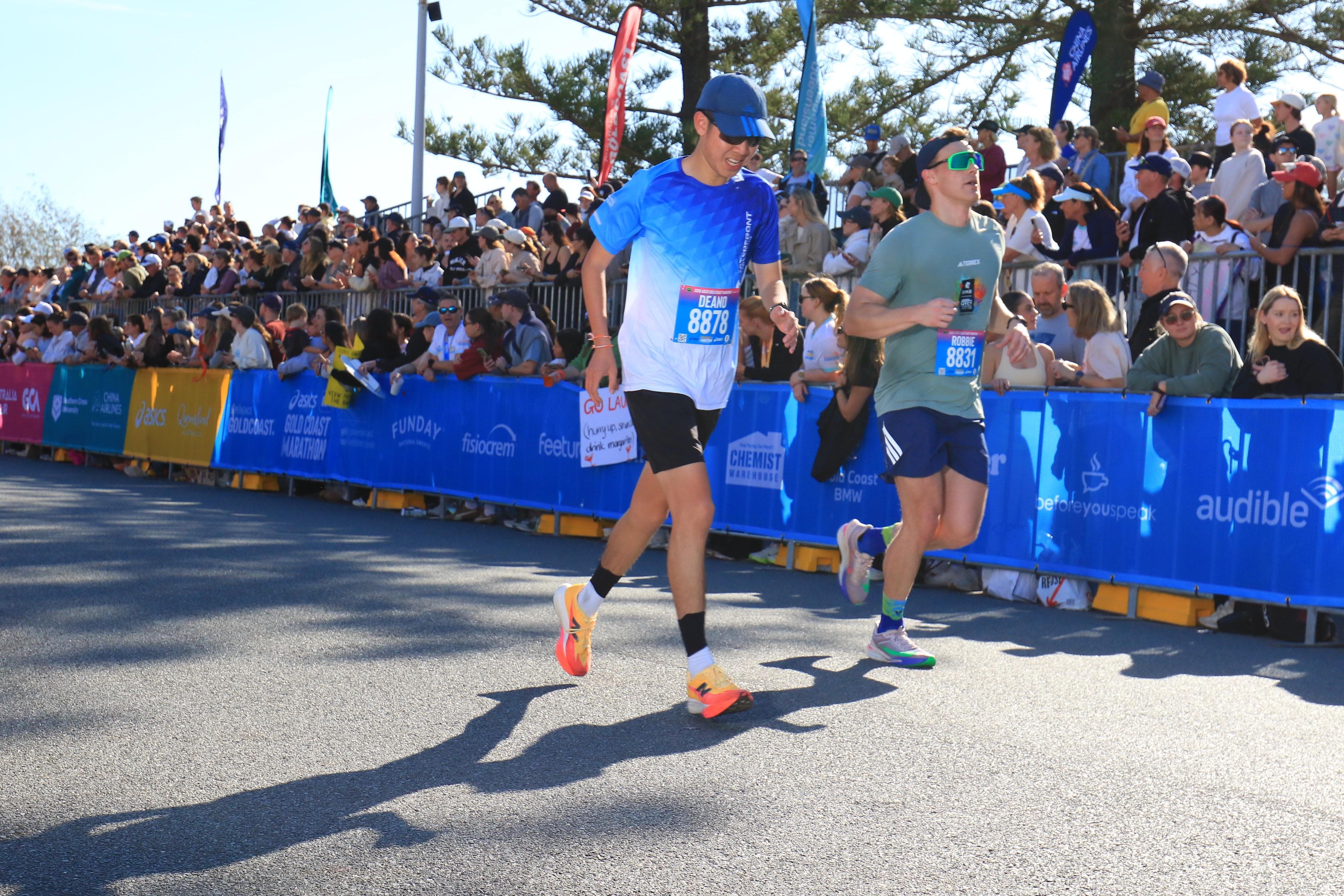
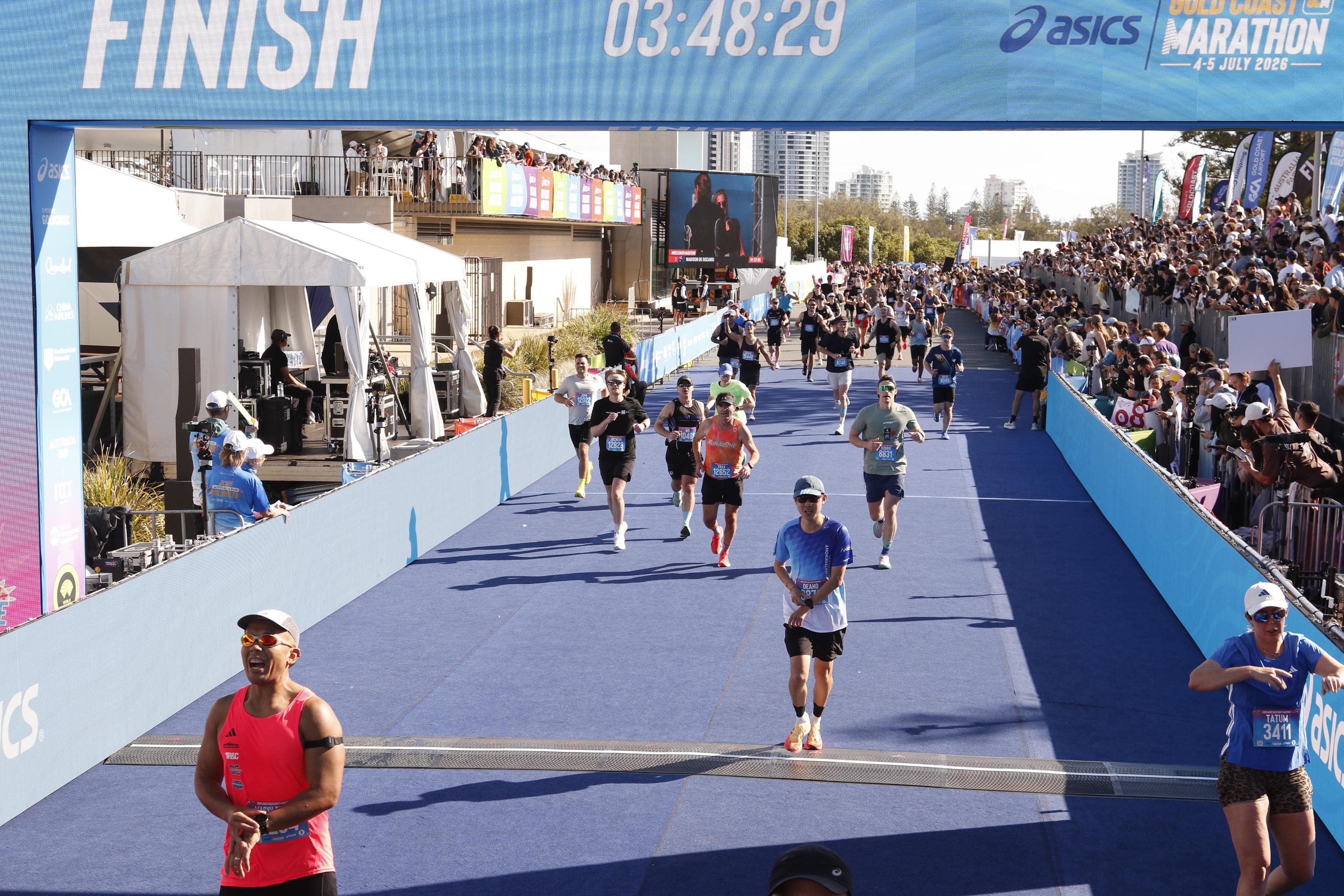
A couple weekends ago, I ran my second-ever marathon at the 2026 ASICS Gold Coast Marathon event with a chip time of 3:38:19.
After a humbling first experience at the marathon distance last year at the 2025 Nike Melbourne Marathon, I realized that a few weeks of making up fitness post-season from other sports would no longer do the job like it did for me in half marathons.
For me, it meant parking amateur club football which I've played the last 15 odd years of my life, and opening a new door to the sport of running. This year I've learned so much about how to train and prepare for races, and believe I've setup myself up a good foundation to continue running long-term.
This post is a debrief on the race and my first official training block, as well as some quick travelling tips.
The event didn't disappoint:
- A 6:15am start with ideal running conditions at a calm and cool 10-13°C
- A flat (~60m elevation gain), fast, AIMS-certified out-and-back course
- 15k runners pounding the pavement
- The half marathon is on the Saturday, and the marathon is on the Sunday, so you can still watch and support on the other day, or run both if you are crazy!
- A stacked elite field breaking records for both the half and the full
- Rob de Castella's famous pre-race speech
- Amazing crowds throughout the course
- A very well organized event and me wanting to come back in the future
Contents
Race
I had 3 main goals for Gold Coast:
- Get to the start-line healthy and prepared
- Be happy with completing the race and how I finished
- Run my goal time of sub 3:30
I achieved goals 1 and 2, and was 8 minutes off goal 3.
Split times:
| Distance (km) | Split | Race Time | Split Pace (min/km) |
|---|---|---|---|
| 5 | 24:32 | 0:24:32 | 4:54 |
| 10 | 24:24 | 0:48:55 | 4:52 |
| 15 | 24:39 | 1:13:33 | 4:55 |
| 20 | 24:47 | 1:38:20 | 4:57 |
| 25 | 24:44 | 2:03:40 | 4:56 |
| 30 | 25:40 | 2:28:42 | 5:08 |
| 35 | 28:16 | 2:56:57 | 5:39 |
| 40 | 29:15 | 3:26:11 | 5:51 |
| Finish | 12:08 | 3:38:19 | 5:32 |
As seen by the splits, I was one of many that was claimed by the classic marathon wall. From 30k onwards I shuffled myself to each aid station and took breaks by walking through each of them.
I managed to get a bit of second wind and found a steadier/slower rhythm the last 3-4k and find my way home. I'm proud that I didn't let the wall completely ruin my race, adapting with the aid-station strategy and salvaging my B-goal of sub 3:40.
For fuelling, I took a 30g gel 15 mins before the race, and then tried to every 6km throughout the race, but ended up being every 7/8km in the second half. I also took my planned salt capsules at the 50 minute, 1:50 and 2:50 marks which helped because I did not cramp. This was another positive I took out of the race.
Ultimately, I think I made a couple silly mistakes that cost me sub 3:30:
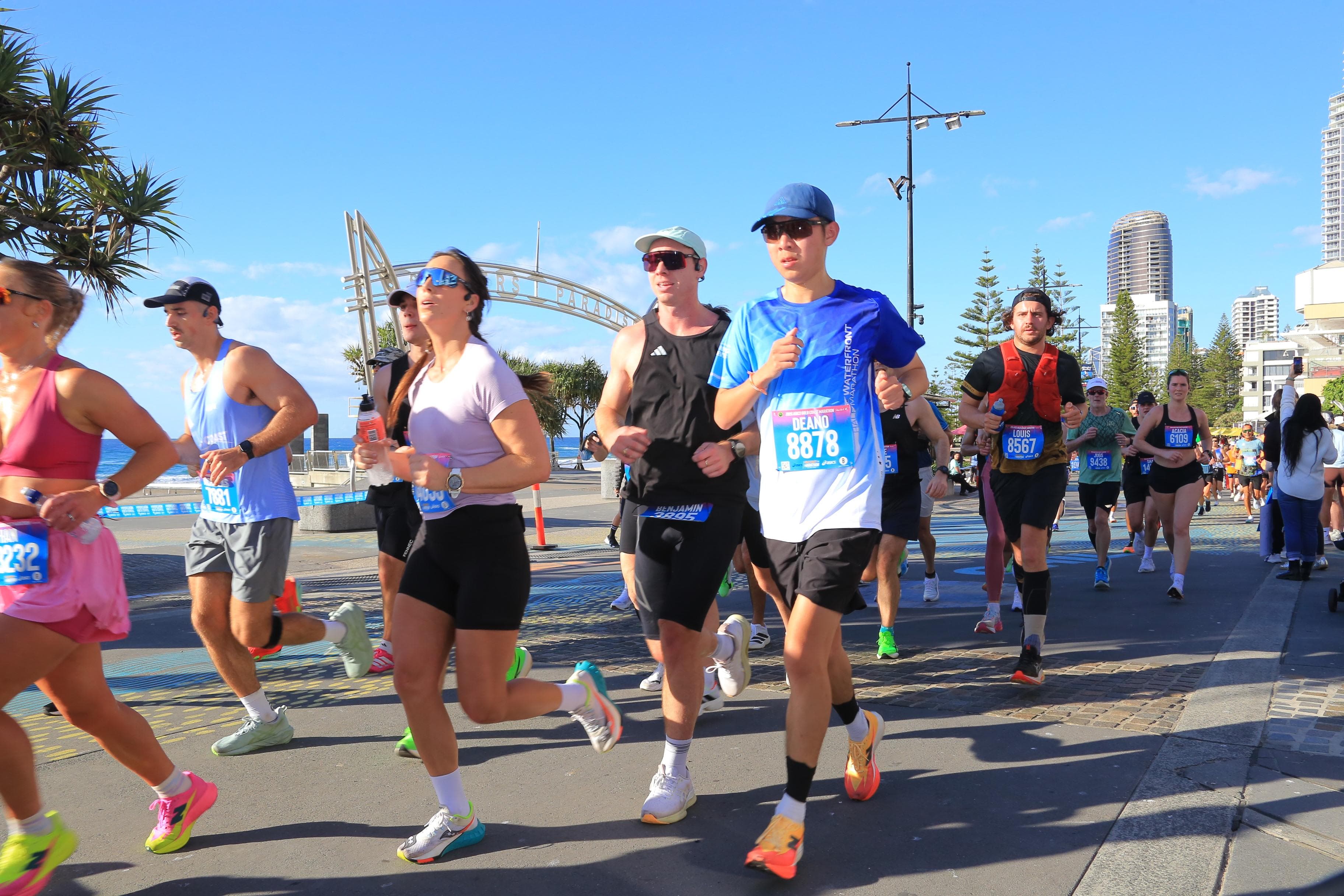
1. Ran a tad to quick between 10-30k section of the race. I stuck with the 3:30 pacer group for the first 10k which was reasonably quick at 4:45-4:55/km, but I assume that was to get out of the crowd and get rhythm. I should have eased back with them and sit between 4:55-5:05 once we hit the 10k. I disrespected the marathon as Rob de Castella says in his pre-race speech, and should have saved myself until the 32k mark and gamble from there.
2. Surging to catchup after a toilet stop. At the 18k mark I had to make a quick toilet stop losing me a minute. I tried to make this up immediately within the km, getting my 18k split down to 5:20/km, but I think this just burned through my glycogen stores - I should have steadily spread out this minute recovery over a longer period and later in the race.
3. Fitness and training mileage was just a bit short for 3:30. While I completed 3 30k+ long runs during my block, my weekly mileage for majority of the marathon specific section of the block (weeks 15 onwards) was in the 60k region, peaking between 65-70km a week. I think I could've reaped more fitness benefits during the week as well, rather than my long runs taking such a large percentage of my weekly mileage. I talk about this more in the training section.
I'll put these down to inexperience in the marathon and hopefully get better with these over more races. A bit of perspective though, 3:38 is still a great time that I am happy with considering it's my first year committing to running!
Training
For Gold Coast, I set myself a 26 week plan to give myself time early-on to get into consistent running and developing my base as it was my first formal training block.
Base Training
Before the 26 week block started in January, I spent time in November/December, running around 5-10k 3-4 times a week to get some time on feet and getting used to running frequently. I also did general weight/resistance training 1-2 times a week.
For the first half of the block (up to weeks 14/15), I was running 4 times a week where I gently increased my mileage. My weekly structure looked like:
- Alternate between week types A and B.
- Week Type A: 2 easy runs, 1 quality session and 1 long run with race pace sections.
- Week Type B: 1 easy run, 2 quality sessions and 1 easy long run.
- Increased my long run distance 1k or 2k a week, starting from 13km.
- Every 4th week was a deload week, reducing my mileage before cycling again.
B-Race: Auckland Waterfront Half Marathon
I had a checkpoint B-race at the flat and fast 2026 ASICS Auckland Waterfront Half Marathon around week 14 or 15 of my block. I ran a 1:40:20 chip time. The beginner gains were real, taking 8 minutes or so off my PB for the half marathon.
I knew I was going to PB this B-race, my main goal was to get a baseline and gauge a marathon goal-time. I arrived at the goal time of 3:30 by 1:40 x 2 + 10 minutes, as well as the VDOT running calculator suggesting 3:28. In hindsight these ceilings I set were more on the stricter side.
Also was happy coming the half marathon out in one piece and with no problems. I am looking forward to a half-marathon specific block in the future which I know I'll be able to cut some time off.
Build and Peak Phases
Because I ran the half-marathon what I considered conservatively, I only needed a day off to recover and was back out easy running on the Tuesday.
I was still a bit worried 4 runs wouldn't do for the marathon, so bumped up training to 5 runs a week:
- Weeks were structured with 1 quality session, 1 long run and 3 easy runs. The reduction in faster work was to accommodate for extra mileage and distances.
- Mileage peaked between 65-70km 3/4 weeks out from the block
- Practiced taking on nutrition (gels and salt tablets) on all my long runs.
- Followed a typical 3 week taper
- 3 of my long runs were over 30km:
- 31km: 15k conversational, 16k race effort
- 34km: all conversational
- 31km: 6k conversational, 23k race effort, 2k conversational
Honestly besides the above I don't have anything interesting to talk about the build and peak phases. I was just consistently stacking the kilometer's and it all went by quickly.
Next Block and Race
I was pretty proud of myself of accomplishing these distances in my first training block, but I think there are some improvements to get that 3:30:
-
Continuing to run 5 times a week, but incorporate two consistent quality sections within the week e.g. 1 workout during the week and 1 long run with paced sections, or 2 workouts during the week.
-
More consistent mileage throughout the week, I think a 65-70km peak week was good for a first block. However considering 40-50% of these peak weeks were made of the gigantic 30km+ long run, there is room for improvement during the week. This could be simply increasing my easy runs from 40-55 mins (7-10km) to 60-75 minutes (10-12km).
-
Practice being more aggressive with my fuelling during my long run marathon efforts. In practice long runs, I only fuelled every 7/8k (compared to the 6k cadence I planned for race day) so I was naturally delaying taking on fuel in the second half of the race as my body wouldn't be able to get it down. I would also sometimes stop at the fountain midway through long-run efforts to take on this fuel. These minute or two breaks may have unintentionally given me unrealistic recovery time I wouldn't get during the race.
-
Strength work. This dropped off from twice a week to none as I entered the second half of my block when I bumped up to 5 runs a week. I will commit to do once a week and stack it on a hard run or long run day, planning for the day after this to be a complete rest day.
Fortunately I've got a shot at redemption, having an entry to the 2026 Nike Melbourne Marathon on the October 11th. I know this is a quick turnaround and not ideal to do another marathon 3-4 months after, but life is short and Kipchoge will be running so I can't miss out.
I have had a good full week off, and have reverse-tapered with a couple weeks of easy running and park runs - getting my way back up to 35-40k. Next week I begin my 10-11 weeks of the rebuild and will have another go at that sub 3:30!
Travelling Guide
If you're like me who travelled to the Gold Coast for the event, here are some things that may help with planning your trip. The event website also has additional details which you can use to adjust your plans.
Accommodation
I highly suggest to start looking for accommodation once your entry has been confirmed, especially if you are travelling with others. The city gets busy with the marathon, as well as it coinciding with school holidays.
Try to find a place that is walking distance from the G:Link tram. This will help with you getting almost anywhere you need to in the main city of Gold Coast. Each trip on the tram is only 50 cents, making it a cheap option getting around!
Bib Pick Up
The bib pick up and race expo is at the Gold Coast Convention and Exhibition Centre, Broadbeach. The tram stops across the road outside (Broadbeach North stop).
It will be less busy at the race expo on the Saturday as the half marathon is on the Saturday. Otherwise, the Thursday and Friday may be busier as both half marathon and marathon runners will both be there.
Race Day
The precinct and race start is located at Broadwater Parklands, Marine Parade, Southport. Again, trams run directly here giving you a couple stops which you can walk from. The trams do get really busy before and after the race, some tips:
-
If you pick your accommodation towards the end of the line, you will be one of the earlier people onto the tram.
-
Trams start running from 4am, so I suggest try getting on as early as possible to avoid how busy it can get. It only took me 15 minutes going from Northcliffe (3rd/4th last South stop) to Southport station. You may want to practice catching the tram like you would on race day (e.g. watching the half marathon) to familiarize.
-
It takes forever to leave the event on the tram if going south. It is already full and cannot load more people on when arriving. Take the opposite direction north and switch over at the north beginning/end of the line to come back south. Consider an Uber, your legs are already tired enough!